
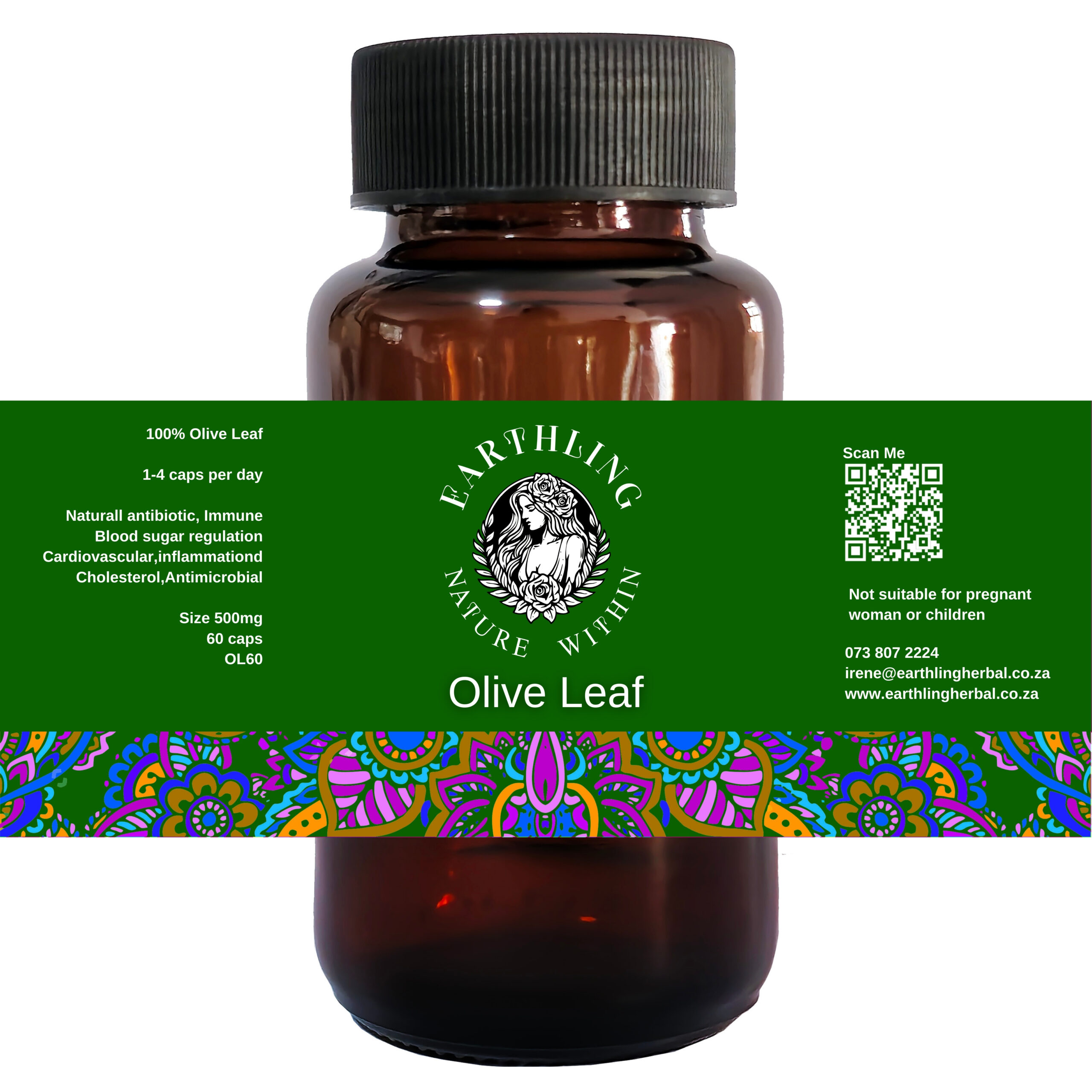
60 Capsules
500mg
Ingredients:
Pure Olive Leaf Powder
Dosage:
2–4 capsules per day
Description:
Heart Health
The first way Olive Leaf can benefit the heart is by its ability to foster significant drops in elevated blood pressure – extracts have been shown to both prevent and treat high blood pressure. One particularly fascinating study was conducted among identical twins with borderline hypertension (blood pressure in the range of 120–139 mmHg over 80–89 mmHg). Studies of identical twins virtually eliminate genetic variations which may impact study results. After 8 weeks, placebo recipients showed no change in blood pressure from baseline, but patients supplemented with 1,000 mg/day of olive leaf extract dropped their pressures by a mean of 11 mmHg systolic and 4 mmHg diastolic. The supplemented patients also experienced significant reductions in LDL cholesterol.
Secondly, Olive Leaf supports arterial health – the endothelial cells that line the arterial walls play a key role in maintaining blood flow and pressure, with endothelial dysfunction being one of the earliest stages of hardening of the arteries (atherosclerosis). Olive Leaf can fight endothelial dysfunction on many levels; it increases the production of nitric oxide – a signalling molecule that helps to relax blood vessels. This powerful leaf also has multi-targeted anti-inflammatory effects which may help to prevent the oxidisation of LDL cholesterol which can damage arteries and, again, lead to atherosclerosis.
Finally, polyphenol compounds found in olive leaves have been shown to help directly prevent the formation of arterial plaques (and thereby reduce the risk of heart attack and stroke) in two ways. First, they reduce the production and activity of a series of “adhesion molecules.” These substances cause white blood cells and platelets to stick to arterial walls, resulting in early plaque formation. Second, they reduce platelet aggregation (clumping) by multiple mechanisms, which in turn reduces the risk that tiny clots will form at sites of plaque to produce a stroke or heart attack.
Diabetes
There is evidence to suggest that Olive Leaf could provide a natural alternative for diabetes. Researchers from the University of Auckland have discovered that extract of this leaf has the ability to decrease insulin resistance and increase the production of insulin by the pancreas.
In a randomized, double-blinded and placebo-controlled clinical study, the researchers found that the olive leaf extract lowered insulin resistance by an average of 15% and increased the productivity of the pancreas’ beta cells – which produce insulin – by 28%.
This effect is due to the olive leaf’s hypoglycaemic properties (lowers blood sugar in the body), and its ability to control blood glucose levels. The polyphenols in this leaf play a vital role in delaying the production of sugar, which is the precursor to inflammatory diseases such as diabetes.
Immune System
Olive leaves have been traditionally used for centuries to support the immune system, maintain overall good health, and relieve symptoms of coughs, colds, and flu. It has five times (400%) more antioxidant power than the equivalent amount of Vitamin C.
The Olive Leaf also has antiviral properties, with research showing that extracts can effectively fight against a number of disease-causing microbes. These powerful compounds destroy invading organisms and prevent viruses from replicating and causing infection.
Anti-Fungal
The aforementioned antimicrobial effect was tested in a 2003 study by D. Markin et al. The researchers found that Olive Leaf extracts killed almost all bacteria tested. This included dermatophytes (which cause infections in the skin, hair, and nails), Candida albicans (an agent of oral and genital infection), and Escherichia coli (E. coli) – bacteria found in the lower intestine.
This makes Olive Leaf a wonderful herb to eliminate Candida overgrowth, and an excellent anti-fungal for the treatment of athlete’s foot and toenail fungus.
Bone Health
Inspired by epidemiological evidence showing that people who ate a traditional Mediterranean diet were less likely to suffer from osteoporosis, Dr. Veronique Coxam has led research into the powerfully active compounds in Olive Leaf – oleuropein and hydroxytyrosol. Her early work showed that both of these compounds had an impact on inflammation in bones – findings since confirmed by animal studies.
Research performed by scientists at the University of Cordoba, Spain, studied the effects of a range of oleuropein concentrations on the formation of osteoblasts (cells that secrete the substance of bone) in stem cells from human bone marrow. The researchers concluded, “Our data suggests that oleuropein, highly abundant in olive tree products included in the traditional Mediterranean diet, could prevent age-related bone loss and osteoporosis.”
Reviews
There are no reviews yet.